
Choosing between a matte or glossy finish affects reflection, visual weight, perceived texture, and the way furniture interacts with surrounding light. Neither is universally better; the right choice depends on room lighting, surface size, practical use, and the material palette around it.
MCASA’s custom furniture service can coordinate finishes with the room rather than selecting them in isolation.
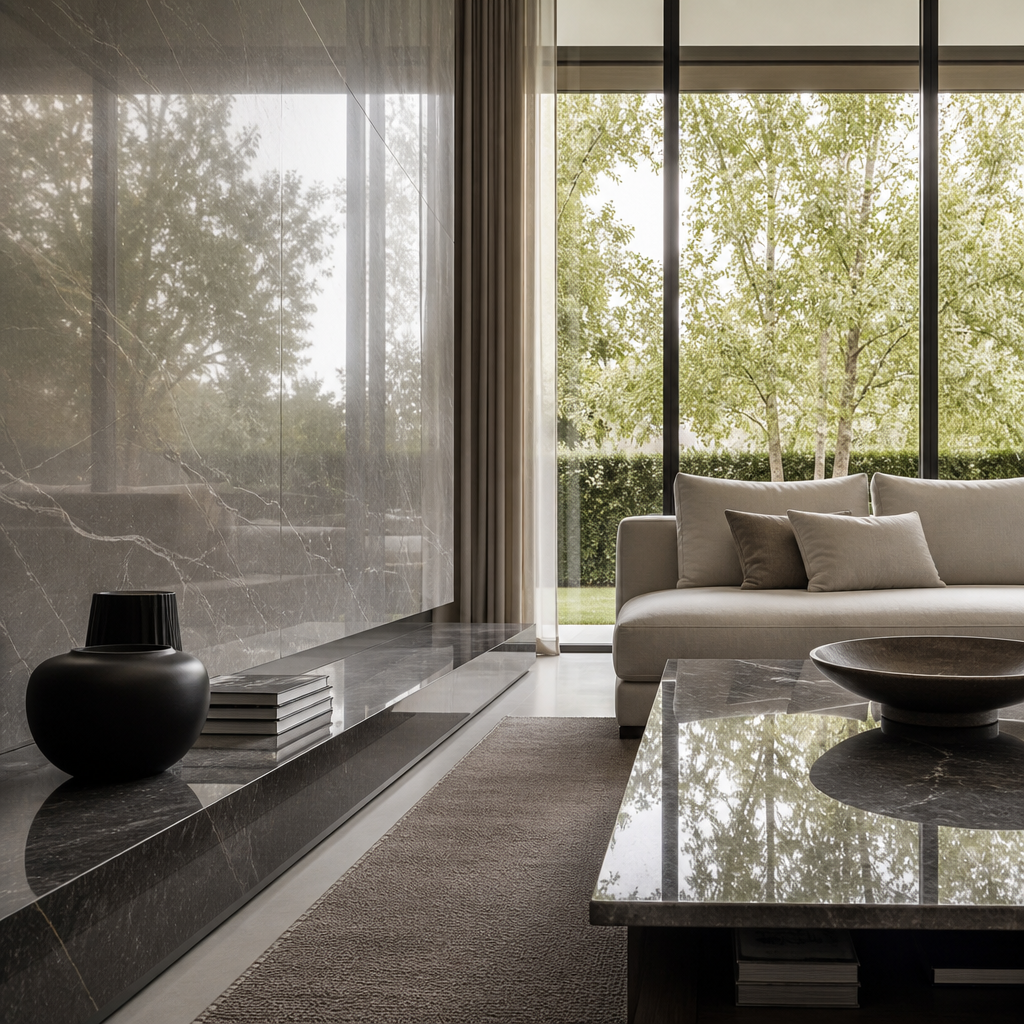
How Matte and Glossy Surfaces Behave
Matte surfaces generally create softer reflections and a quieter visual presence. Glossy surfaces create stronger highlights and can make a form feel sharper or more reflective.
The effect changes with lighting, angle, and the size of the surface. A small glossy accent may feel controlled, while a large glossy cabinet elevation can become much more visually active.
Evaluate the Finish in the Actual Room
Samples should be tested in the room where the furniture will stand. Move them through daylight, evening lighting, and different viewing angles. A sample that looks subtle on a table can behave very differently on a full-height cabinet.
Check Both Vertical and Horizontal Surfaces
Horizontal tabletops receive objects, touch, and overhead light differently from vertical doors or wall panels. Test a finish sample in both orientations whenever possible.
Use the Surrounding Palette as Context
A glossy accent can add definition among mostly matte, tactile materials, while an all-reflective composition may feel visually busy. Conversely, a completely matte interior may benefit from controlled contrast.
The objective is balance, not a strict rule that one finish type is superior.
Consider Practical Use
Identify which surfaces are frequently touched, cleaned, or viewed under direct light. Ask for care information for the proposed finish rather than assuming maintenance requirements based on appearance alone.
Handles, edges, grooves, and material transitions should be included in the sample review because these details affect the completed result.
Matte vs Glossy: Quick Comparison
| Factor | Matte | Glossy |
|---|---|---|
| Reflection | Softer | Stronger highlights |
| Visual presence | Quiet, restrained | Sharper, more active |
| Large surfaces | Often visually calmer | Can become dominant |
| Accent use | Subtle contrast | Strong emphasis |
| Best evaluation | Always test in the intended room and lighting | |
Example: Large Built-In Cabinet
For a large built-in, a matte finish may reduce the visual weight of a broad elevation, especially in a room with strong daylight. A glossy finish can still work if the design intentionally uses reflection as part of the composition.
Example: Small Accent Piece
A console, side table, or selected door panel can use gloss as a controlled accent without making the whole room reflective. Pair it with quieter materials to maintain balance.
Create a Small Finish Board
- Include flooring, wall color, upholstery, timber, stone, and metal samples.
- Add the proposed matte and glossy finish options.
- Photograph the board in daylight and evening light.
- View samples vertically and horizontally.
- Remove combinations that compete rather than support the furniture form.
How Finish Choice Changes by Furniture Type
A finish that works on a small side table may behave very differently on a full-height wardrobe or wall-to-wall cabinet. Large uninterrupted surfaces amplify reflection, texture, and color variation, so test the finish at a scale that represents the final piece.
For dining tables and work surfaces, practical use becomes more important because the surface is viewed and touched at close range. For vertical cabinetry, the relationship with daylight and surrounding walls may have a stronger visual effect.
Questions to Ask before Approving a Finish
- How does the sample look in daylight and evening light?
- Will the surface be frequently touched or cleaned?
- Is the finish used on a large plane or a small accent?
- Does it compete with nearby stone, metal, timber, or upholstery?
- Will the reflection help or distract from the furniture form?
- What care instructions apply to the specific finish?
FAQ: Matte or Glossy Finish
Is matte always easier to maintain?
Not necessarily. Maintenance depends on the specific material and coating. Ask for product-specific care guidance.
Does gloss make a room look larger?
Reflection can change visual perception, but the effect depends on surface size, lighting, and overall layout. It should not be treated as a universal rule.
Can matte and glossy finishes be mixed?
Yes. A controlled mix can create hierarchy when the contrast supports the overall material palette.
Should finish samples be reviewed only under showroom lighting?
No. Review them in the actual room whenever possible because natural and artificial lighting can change how the finish appears.
Use a Final Room-Side Test
Before approval, place the selected sample beside the actual wall color, flooring, upholstery, and nearby furniture. Review it from the main entrance, the closest seated position, and the point where daylight is strongest. This final room-side test helps confirm whether the finish supports the interior rather than only looking attractive as a sample.
Conclusion
The choice between a matte or glossy finish should be made in context. Test samples in the intended room, compare them across orientations, and consider both visual effect and practical use.
For more material direction, see MCASA’s article on furniture trends, materials, forms, and function or review the MCASA gallery.