
How to Choose Hinges and Drawer Slides for Custom Cabinets
Choosing hinges and drawer slides for custom cabinets affects how furniture feels every day. The cabinet may look refined from the outside, but poor hardware can make doors sag, drawers feel rough, or storage become inconvenient.
For bespoke furniture, hardware should be selected according to door size, drawer weight, opening angle, frequency of use, and the overall design intent.
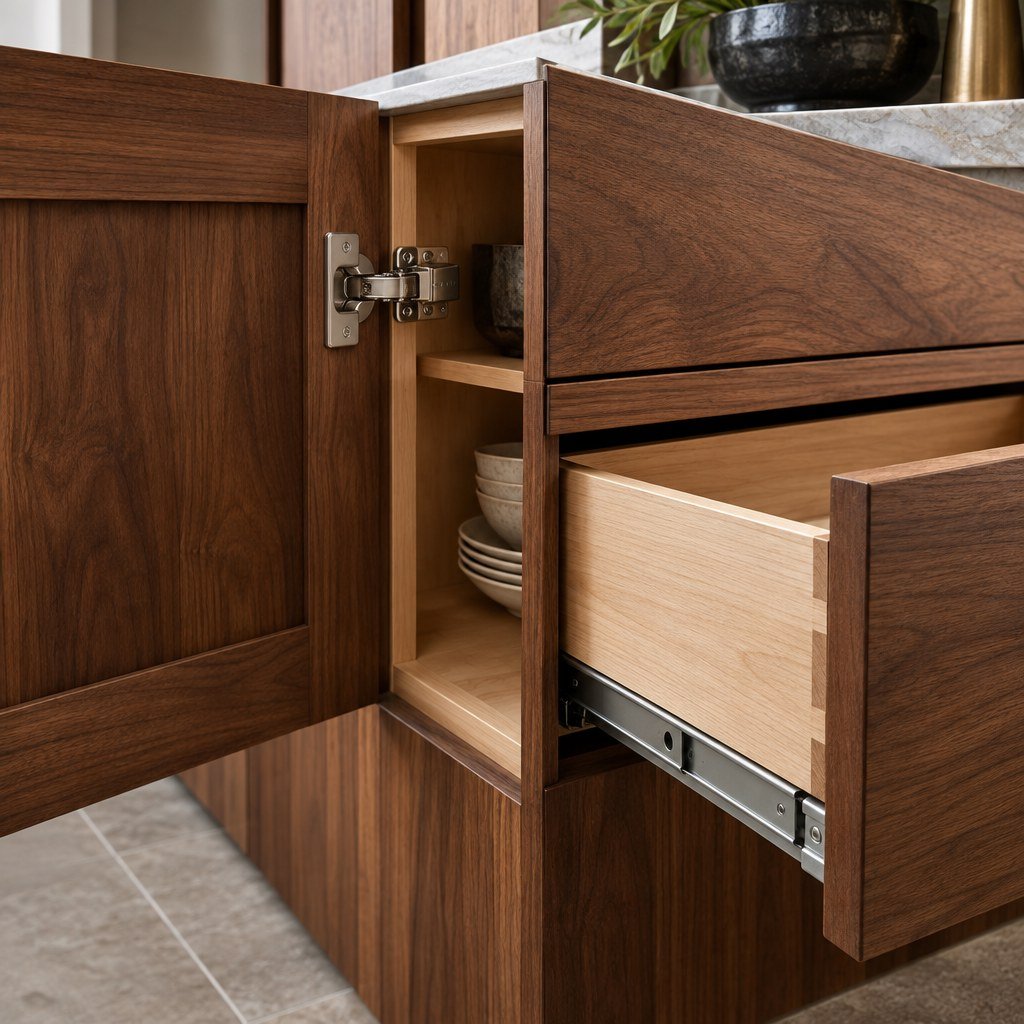
Why cabinet hardware matters
Hinges and drawer slides carry repeated movement. Their quality influences alignment, sound, opening resistance, and long-term serviceability.
Hardware selection should therefore happen during the design stage, not after the cabinet structure is already fixed. For a broader planning sequence, see Planning Custom Furniture from Concept to Completion.
Start with the cabinet function
A wardrobe door, kitchen cabinet, TV console, and bedside drawer have different usage patterns. Before selecting hardware, define:
- how often the door or drawer will be opened;
- the approximate weight of the front panel;
- the expected load inside the drawer;
- whether soft-close is preferred;
- whether full extension is required;
- how much internal space can be allocated to hardware.
Common hinge considerations
Opening angle
Standard doors may only need a regular opening angle, while corner cabinets or special layouts can require wider access.
Soft-close mechanism
Soft-close hinges reduce abrupt door movement and can improve the perceived refinement of frequently used cabinetry.
Door thickness and weight
Large or heavy fronts may need additional hinges or a different hinge specification compared with small lightweight doors.
Common drawer slide considerations
| Feature | Why It Matters | Typical Use |
|---|---|---|
| Load capacity | Prevents sagging or rough movement under weight | Kitchen drawers, filing storage, heavy accessories |
| Full extension | Improves access to the back of the drawer | Deep storage and utility drawers |
| Soft close | Reduces impact when closing | Bedrooms, living rooms, kitchens |
| Concealed slide | Keeps hardware less visible | Refined bespoke cabinetry |
Match hardware to the material
The weight and thickness of timber, engineered board, glass framing, or decorative panels influence the hardware specification. A beautiful front panel still needs support appropriate to its actual weight.
For material planning, read How to Choose Materials for Custom Luxury Furniture.
Think about maintenance and adjustment
Good cabinet hardware should allow practical alignment and servicing. Doors may need adjustment after installation as materials settle or usage patterns become clear.
Hardware that can be adjusted without dismantling major cabinet components makes future maintenance easier.
Avoid specifying hardware only by appearance
Many important components are hidden once the cabinet is installed. This means performance should take priority over visual assumptions. A concealed slide may look cleaner, but it still needs the right capacity and extension range.
Coordinate hardware with electrical planning
Cabinets with integrated lighting, charging points, or devices need hardware movement that does not interfere with cables. Review power outlets and cable management for custom furniture when cabinetry includes electrical features.
Side-mount versus concealed drawer slides
Side-mount slides are visible when the drawer is open and can be practical for utility-focused applications. Concealed or undermount systems keep the hardware less visible and are often preferred when the design calls for a cleaner interior appearance.
The decision should not be based on appearance alone. Drawer width, expected load, available construction space, and service access all affect which system is appropriate.
Example: hardware choices by furniture type
| Furniture | Hardware Priority | Key Question |
|---|---|---|
| Wardrobe | Door alignment and opening angle | Will the door clear adjacent panels and handles? |
| TV console | Smooth drawers and cable clearance | Can the drawer move without interfering with devices or wiring? |
| Bedside table | Quiet movement | Would soft-close improve everyday use? |
| Kitchen storage | Load capacity and full extension | Will heavy contents remain easy to access? |
Ask for the hardware specification before production
Before fabrication begins, the furniture specification should identify the hinge or slide type, opening requirement, load expectation, and whether soft-close or full extension is included. This reduces ambiguity during production and installation.
If the project is still at consultation stage, Questions to Prepare Before a Custom Furniture Consultation can help organize these decisions before detailed drawings are finalized.
Checklist before approving cabinet hardware
- Confirm door and drawer dimensions.
- Estimate panel and storage weight.
- Define the required opening angle.
- Decide whether soft-close is necessary.
- Confirm full-extension requirements.
- Check hardware clearance inside the cabinet.
- Confirm adjustment and maintenance access.
- Review compatibility with lighting or cable routes.
FAQ about hinges and drawer slides
Are soft-close hinges always necessary?
No. They are useful for frequently used cabinetry and refined interiors, but the final choice depends on function, budget, and design preference.
What is the benefit of full-extension drawer slides?
They allow more of the drawer to move outside the cabinet, making items at the back easier to reach.
Can one hardware type be used throughout the whole house?
Not always. Different cabinets can require different load capacities, opening angles, and movement features.
When should hardware be selected?
Ideally during the design and engineering stage, before final cabinet dimensions and production details are locked.
Plan Your Custom Cabinet Project
For a tailored approach to cabinetry, storage, materials, and hardware, explore Custom Furniture Bandung or contact MCASA to discuss your project.