
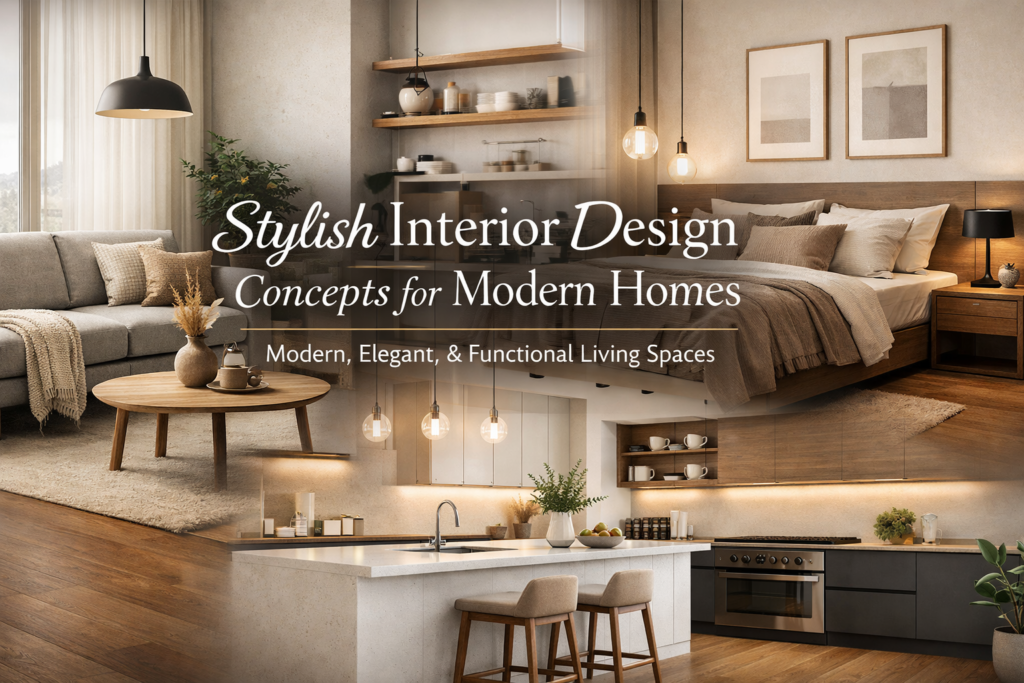
Modern homes today are more than just places to live—they are reflections of lifestyle, personality, and functionality. Stylish interior design blends aesthetics with comfort, creating spaces that feel both elegant and practical. Whether you are designing a new home or refreshing your current space, understanding modern interior concepts is key to achieving a timeless look.
1. Minimalism with Purpose
Minimalism remains one of the most popular interior design trends. It focuses on simplicity, clean lines, and clutter-free spaces. However, modern minimalism is not about emptiness—it is about intentional design. Each piece of furniture and decoration serves a purpose, contributing to both function and beauty.
2. Neutral Color Palettes
Modern interiors often use neutral tones such as white, beige, grey, and soft earth colors. These shades create a calming atmosphere and make spaces feel more open and airy. To avoid monotony, designers often add subtle textures or accent colors like black, gold, or muted green.
3. Open-Concept Living Spaces
Open layouts are a hallmark of modern homes. By combining living rooms, dining areas, and kitchens into one cohesive space, homeowners can enjoy better flow and interaction. This concept also maximizes natural light and makes smaller homes feel larger.
4. Functional Furniture
Furniture in modern homes is designed with both style and utility in mind. Multi-functional pieces such as sofa beds, storage ottomans, and modular shelving systems are highly valued. They help save space while maintaining a sleek and stylish appearance.
5. Natural Elements Integration
Incorporating natural materials like wood, stone, and plants adds warmth to modern interiors. Indoor plants not only enhance visual appeal but also improve air quality and create a relaxing environment.
6. Smart Lighting Design
Lighting plays a crucial role in modern interior design. Layered lighting—combining ambient, task, and accent lighting—creates depth and highlights key areas. LED strips, pendant lights, and hidden lighting are commonly used to achieve a contemporary look.
7. Personal Touch and Art
Modern design encourages personalization. Artwork, decorative pieces, and unique textures help express individuality while maintaining overall harmony. The key is balance—adding character without overwhelming the space.