
Lighting Defines How Luxury Furniture Is Seen
Lighting changes luxury furniture by altering the way its color, texture, form, scale, and finish are perceived. Daylight can expose timber grain and subtle upholstery weaves, while focused artificial light creates deeper highlights and shadows. Warm evening illumination may make wood and leather feel richer; cooler light can sharpen pale stone, metal, and contemporary lacquer. The same cabinet can therefore look calm in the morning, dramatic at sunset, and flatter under poorly placed ceiling lights. Successful furniture lighting treats furnishings, fixtures, windows, curtains, and wall finishes as one composition.
For rooms shaped around individual proportions and materials, MCASA’s custom furniture service can coordinate placement, finish, and viewing angles with the surrounding interior rather than treating lighting as a late decorative addition.
Observe Furniture Lighting from Every Direction
Begin by observing the room in the morning, at midday, and after sunset. Record where direct sun lands, how long it remains, and whether it crosses a tabletop, cabinet front, or sofa. Sunlight entering from different directions can reveal texture beautifully, but strong contrast may divide a large surface into bright and dark zones.
Then evaluate the furniture from the doorway and from every normal seated or standing position. A polished dining table that appears elegant on arrival may reflect a pendant directly into a guest’s eyes. Likewise, a cabinet light may produce glare when viewed from the sofa even if it looks balanced while standing.
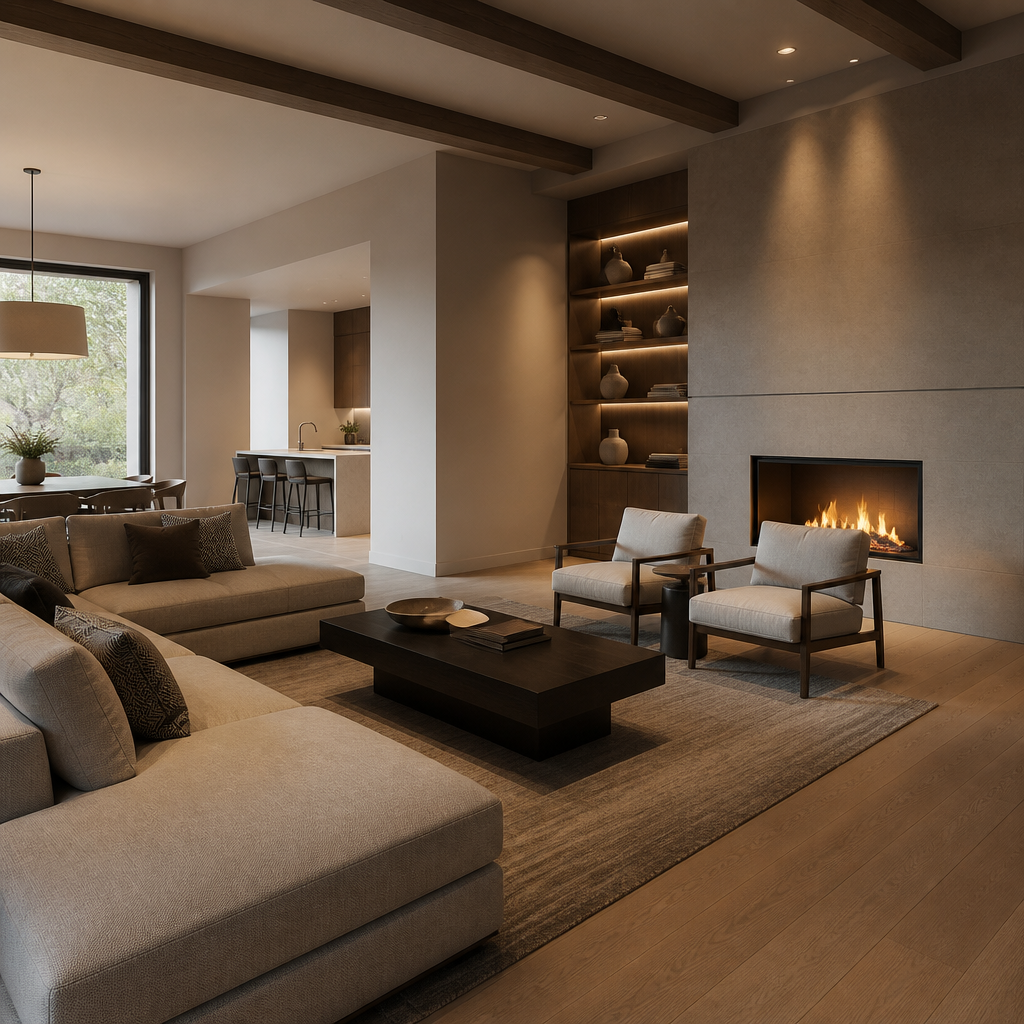
Review real furniture samples under daylight and the actual evening light temperature planned for the room, from several viewing positions.
Match Lighting to Materials and Finishes
No single lighting approach suits every premium material. Direction, intensity, diffusion, and apparent warmth all change what the eye notices. Use this comparison as a practical starting point, then test the actual finish in its intended room.
How Common Finishes Respond
- Matte finishes scatter light softly, creating gentle transitions and making silhouettes easy to read. They tolerate broad ambient light well, although some directional light prevents them appearing lifeless.
- Glossy lacquer and polished stone mirror bright sources. Use larger diffused sources, shift fixture angles, and check reflections across the full surface before approval.
- Wood gains depth when light travels across rather than directly into its grain. Warm light can enrich brown tones, but sample testing avoids unwanted orange shifts.
- Textured upholstery looks more dimensional under soft side lighting. Very steep beams can exaggerate every crease, while flat frontal light may hide the weave.
- Metal accents create crisp highlights. A narrow beam adds sparkle, whereas multiple visible sources can make handles, trims, or bases visually busy.
For related color planning, read Palette Transforming Luxury Furniture.
Plan Light in Coordinated Layers
Artificial lighting works best in layers. General illumination supports movement. Focused accent light can emphasize a table, cabinet, artwork, or seating group. Decorative fixtures add character, but their brightness and reflections should never compete with the furniture.
Balance Function, Atmosphere, and Scale
Place light according to use, not symmetry alone. A dining pendant should illuminate the eating surface without blocking sightlines or creating a glaring hotspot. Near a lounge chair, a task light should support reading while leaving the upholstery comfortable to view. For tall storage, light from above can emphasize height, whereas lateral illumination often makes the front feel broader.
Color appearance also depends on surrounding finishes. A pale sofa beside a dark wall may seem brighter because of contrast, while the same sofa against a similar wall can visually recede. Curtains alter daylight quantity and direction, so select them before making final lighting judgments.
Use a Final Room Review Checklist
Before approving furniture and lighting, compare the proposal with accurate measurements, room photographs, and ordinary daily use. A simple full-scale mock-up can expose conflicts early.
- Check daylight direction and duration at several times, including strong afternoon exposure.
- Confirm ambient light supports movement without flattening every furniture form.
- Aim accent lights at materials, then carefully assess shadows and reflected hotspots.
- View tabletops, screens, polished doors, and metallic details while seated and standing.
- Test physical samples under both daylight and the selected evening room illumination.
- Review furniture, curtains, wall finishes, artwork, and fixtures as one composition.
- Separate essential functional changes from visual preferences before revising the plan.
- Record confirmed dimensions, finishes, access needs, fixture positions, and open questions.
Floor tape can confirm furniture scale and circulation, while a finish sample held vertically or horizontally shows how viewing angle changes reflection. When one adjustment is proposed, assess its effect on every neighboring element rather than judging it separately.
Frequently Asked Questions
Does Warm Light Always Suit Wooden Furniture?
No. It often enriches brown tones, but overly warm light can make some timbers appear orange. Test the real sample beside surrounding finishes.
Why Does Glossy Furniture Look Streaky at Night?
Visible bulbs and narrow beams create concentrated reflections. Diffuse, reposition, or reduce competing sources, then review the surface from normal seats.
Can Ambient Lighting Be Enough?
It supports general use, but relying on it alone can flatten texture and form. Add selective accent or task lighting where depth or function matters.
Should Samples Be Checked Only at Night?
No. Review them in changing daylight and under planned evening light because color, grain, sheen, and contrast can shift substantially.
Shape Furniture with Light
Explore the MCASA gallery, then coordinate your room through custom furniture.