
Layering furniture tones creates depth without sacrificing the calm character expected in an elegant interior. Explore MCASA’s custom furniture service for solutions developed around the room.
Build a Controlled Furniture Tone Palette
Choose one dominant tone, then add closely related shades through upholstery, timber, or painted surfaces. Controlled variation keeps the room from feeling flat.
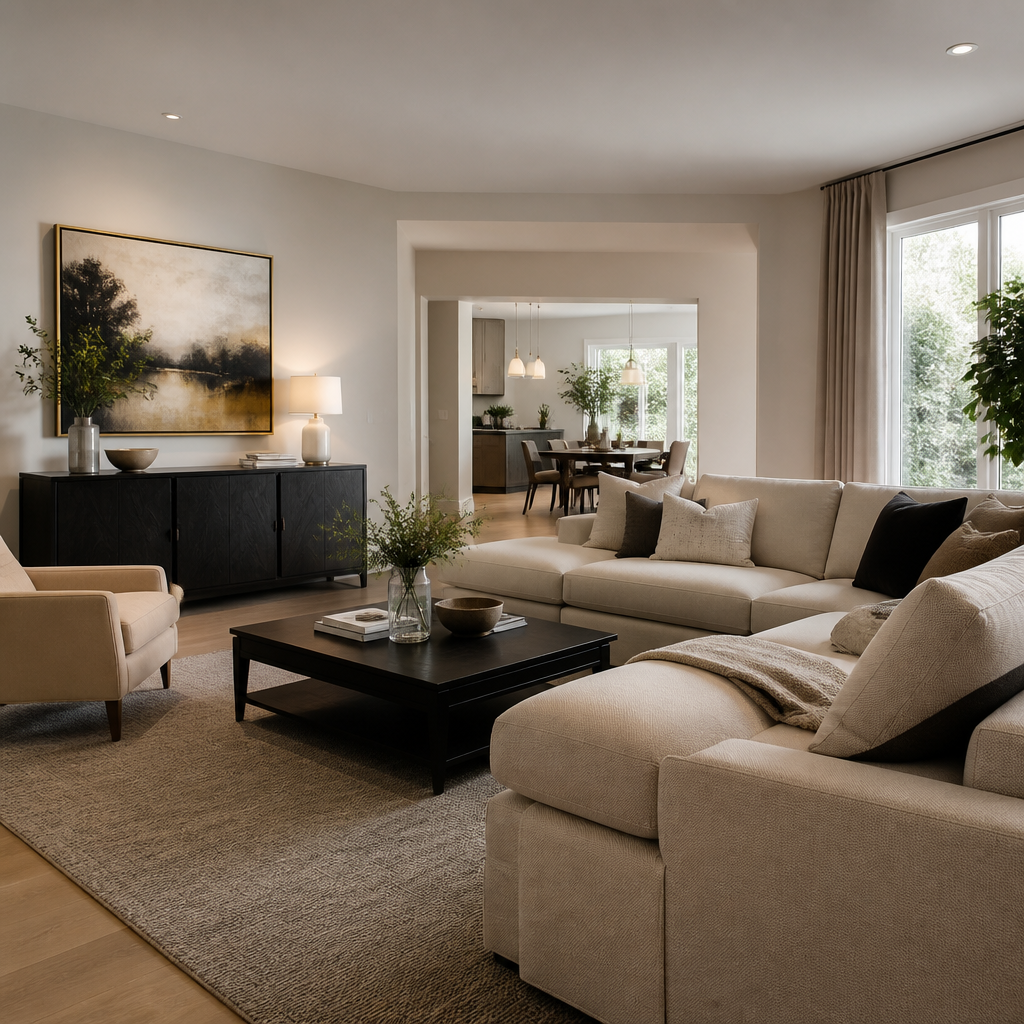
Photograph material samples together in the room; a camera view can reveal imbalances that are easy to miss up close.
Use Contrast with Restraint
A darker console, chair, or cabinet can anchor a lighter room. Repeat that deeper tone in a small number of details so the contrast appears deliberate.
Building Depth with a Controlled Palette
Start by identifying the existing elements that are unlikely to change, such as flooring, wall finishes, stone surfaces, and major built-ins. These form the background against which furniture tones will be read. Select a dominant furniture tone that works with those fixed elements, then introduce related lighter or darker variations. Beginning with the room’s actual conditions prevents the palette from becoming a collection of attractive but disconnected samples.
Tone is different from simply naming a color. Two beige fabrics may have noticeably different warmth, depth, or undertones when placed together. Compare samples side by side and then separate them across the room to see how they interact at a distance. Repeating one underlying warmth or coolness can create cohesion even when the materials themselves are different.
Use deeper tones to create visual anchors. A dark console, table base, occasional chair, or cabinet can give definition to a pale interior, but it should not appear without context. Repeat the deeper note through a small number of carefully selected details. The repetition does not need to be exact; it only needs to be clear enough that the contrast feels deliberate.
Texture changes how tone is perceived. Timber grain, woven upholstery, matte paint, metal, and stone can all reflect light differently even when their colors are closely related. Review the palette under natural and artificial light, especially in the locations where the furniture will stand. A surface that looks balanced in a showroom may appear much lighter or darker in the finished room.
Create a compact sample board and photograph it within the interior before approving the combination. Include the largest furniture surfaces as well as smaller accents. If the composition feels busy, reduce the number of competing tones rather than adding more decorative elements. A refined layered palette depends on hierarchy: one clear foundation, supporting variations, and restrained contrast.
Complete one final review before approving furniture tones. Compare the tonal palette against accurate measurements, room photographs, and the way the space is used on an ordinary day. Check dominant tones, supporting shades, and controlled contrast from more than one viewing position, not only from the most attractive angle. Ask which decisions are essential for function and which are primarily visual preferences. When an adjustment is suggested, consider how it affects the other elements rather than judging it separately. Keep a short written record of confirmed dimensions, selected finishes, access requirements, and remaining questions so the discussion stays clear. If possible, use floor tape, material samples, or a simple full-scale mock-up to test the most important assumptions. This final step can reveal small conflicts early and helps ensure that the tonal palette remains comfortable, coherent, and appropriate to the surrounding interior.
Read Also
Review the MCASA gallery or discuss your requirements through the custom furniture consultation page.