
Unlike off-the-shelf furniture, a custom approach begins with the interior concept and the way people live or work. The result is not simply a sofa, table, wardrobe, or reception counter; it is a considered element of the space. For clients who value proportion, finish, and long-term relevance, custom work is often the most elegant route.
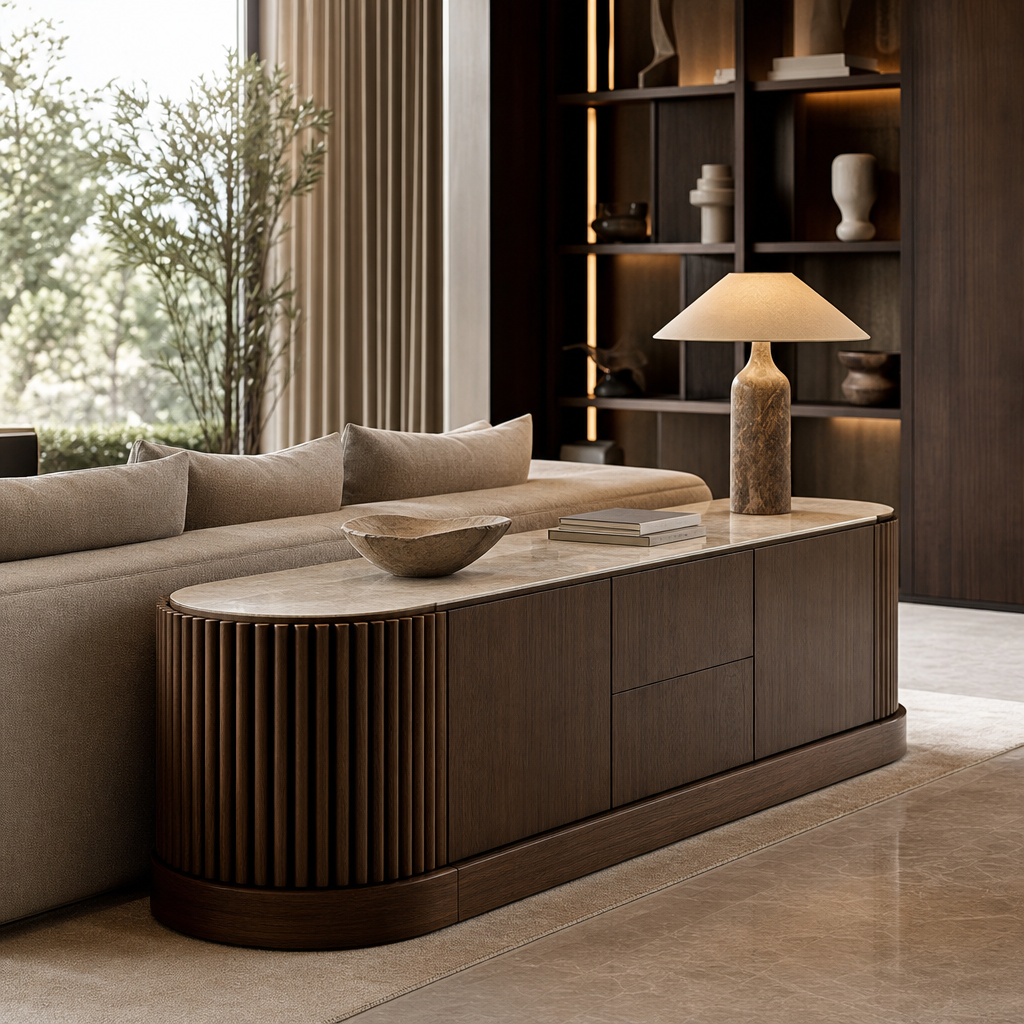
Tailored Dimensions Create a Better Luxury Fit
Luxury interiors are sensitive to proportion. A cabinet that is slightly too deep can crowd a corridor; a dining table that is too small can weaken a generous room. Custom Furniture solves these issues by aligning each piece with wall lengths, ceiling heights, circulation paths, window positions, and existing architectural details.
This precision is especially valuable in apartments, villas, penthouses, and commercial suites where every line is visible. Built-in banquettes can follow a curved wall. A media unit can conceal equipment without looking bulky. A boardroom table can accommodate technology while preserving executive presence.
Design Harmony: Matching Architecture, Mood, and Lifestyle
A luxury room feels calm when furniture belongs to the architecture. With custom design, the scale, silhouette, edge detail, hardware, and finish can echo the larger interior language. A minimalist residence may require slim profiles and hidden storage. A classic lounge may call for warmer tones, paneling, and more substantial forms.
Design harmony also prevents expensive pieces from looking unrelated. Coordinated bedside tables, wardrobes, vanity units, and upholstered seating can share subtle cues without becoming repetitive. This is where Luxury Furniture becomes an interior system rather than a collection of isolated objects.
Comfort, Functionality, Materials, and Craftsmanship
Beautiful furniture still has to perform. The best bespoke pieces combine visible refinement with invisible problem solving.
Comfort Designed Around People
Seat depth, arm height, cushion firmness, and table clearance can be adjusted for the users, not averages. This matters in family rooms, suites, lounges, and hospitality areas where comfort shapes the entire experience.
Function Built Into the Form
Custom storage can hide charging points, documents, minibar equipment, linens, or display lighting. The room stays refined because practical needs are planned into the furniture, not added later.
Materials Selected With Intent
Clients can consider wood veneers, solid surfaces, metals, glass, stone, fabrics, leather, and performance finishes according to the design goal. Selection should balance beauty, maintenance, climate, and daily use.
Craftsmanship in Every Detail
Edges, joins, upholstery seams, drawer movement, and finish consistency separate premium custom work from ordinary furniture. These details are quiet, but they are noticed every day.
The Collaboration Process with a Custom Furniture Partner
A professional process helps transform preference into buildable decisions. For MCASA, this typically starts with understanding the space, design direction, intended use, and priorities of the client or project team. Interior designers, architects, developers, and business owners can then align expectations before details are finalized.
Key stages often include concept discussion, site review, dimension planning, drawings or visual references, material and finish selection, production coordination, and installation planning. Clear communication is essential, especially when custom furniture interacts with lighting, flooring, wall treatments, appliances, or mechanical services.
Rooms and Project Types That Benefit Most
Custom work is useful anywhere a luxury impression depends on fit and consistency. In private residences, it can shape living rooms, master bedrooms, walk-in wardrobes, kitchens, dining rooms, studies, entertainment areas, and bathrooms. In commercial settings, it can elevate lobbies, reception desks, meeting rooms, executive offices, retail displays, restaurants, cafés, and hotel suites.
Edge cases deserve extra care. Compact spaces need furniture that adds storage without visual heaviness. Large rooms need pieces with enough scale to avoid emptiness. Rental, hospitality, and retail environments may require easy maintenance and replaceable components, while show residences may prioritize expressive finishes and dramatic focal points.
Common Mistakes to Avoid
Luxury projects can lose coherence when decisions are made too late or too separately. Avoid these common mistakes:
- Choosing appearance before confirming dimensions and circulation.
- Selecting delicate finishes for high-contact surfaces without discussing maintenance.
- Overfilling a room with custom pieces when negative space would feel more luxurious.
- Ignoring delivery access, lift size, stair turns, and installation sequence.
- Approving colors from screens rather than reviewing physical samples when available.
The best safeguard is early coordination. Custom furniture should be discussed alongside lighting, joinery, finishes, and styling, not after the room is nearly complete.
Planning Checklist Before Commissioning Custom Furniture
Use this checklist before confirming a brief with MCASA or any premium furniture partner:
- Define the room purpose, user profile, and desired atmosphere.
- Confirm site measurements, ceiling heights, doorways, and access routes.
- Prepare references for style, proportions, finishes, and comfort preferences.
- List storage, technology, lighting, or service requirements.
- Discuss maintenance expectations for fabrics, surfaces, and hardware.
- Agree on approval steps before production begins.
FAQs
Is Custom Furniture always better than ready-made Luxury Furniture?
Not always. Ready-made pieces can work when dimensions, comfort, and finish already suit the brief. Custom is stronger when fit, integration, or brand expression matters.
Next Step
For refined residential or commercial interiors, contact MCASA or view current design inspiration on Instagram.