
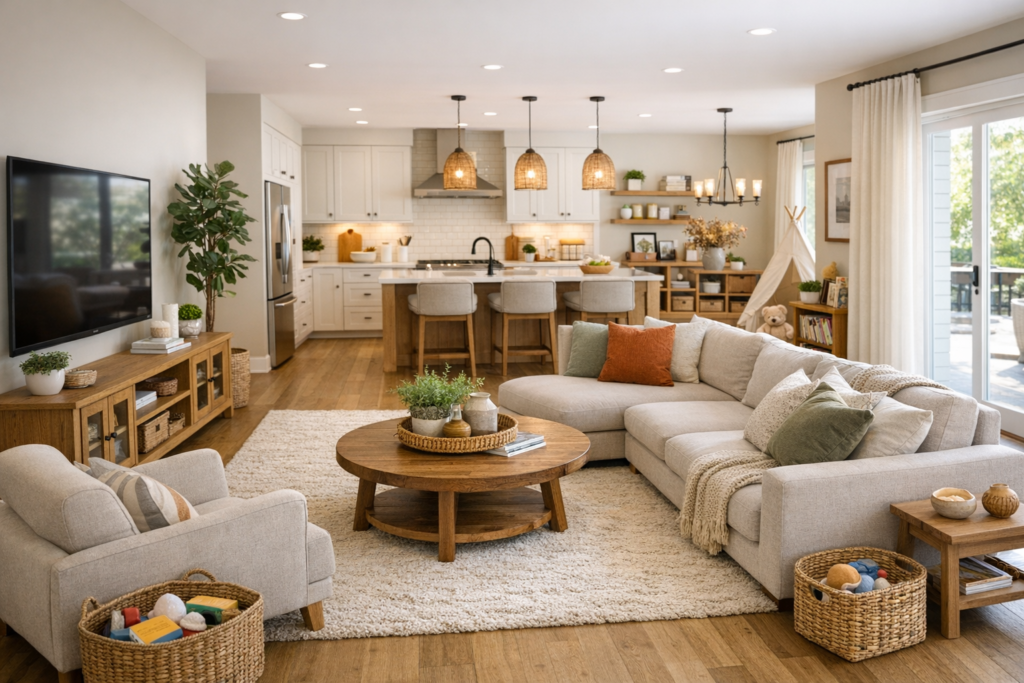
Creating a comfortable family home is about more than just choosing beautiful furniture or trendy colors. A truly comfortable home should support daily activities, encourage togetherness, and provide a relaxing environment for every family member. Good interior design helps make a house feel warm, functional, and welcoming from the moment you step inside.
One of the most important ideas in family home interior design is to prioritize comfort and practicality. Families need spaces that can handle everyday life, from children playing in the living room to parents working or relaxing after a long day. Soft sofas, durable materials, and easy-to-clean surfaces are excellent choices for a home that is both stylish and family-friendly. Comfortable seating in common areas can encourage more quality time together, whether it is for watching movies, talking, or sharing meals.
Open and flexible layouts are also highly effective for family homes. A connected living room, dining area, and kitchen can make communication easier and create a sense of openness. Parents can cook while still keeping an eye on children, and family members can interact more naturally throughout the day. This kind of layout also allows more natural light to flow through the home, making the space feel brighter and more inviting.
Storage plays a major role in keeping family homes comfortable. A beautiful home can quickly feel stressful if it is always cluttered. Built-in cabinets, multifunctional furniture, hidden storage benches, and organized shelving can help keep toys, books, clothes, and daily necessities in order. Smart storage solutions make it easier to maintain a clean and peaceful environment, which contributes greatly to comfort.
Color selection is another important factor. Soft neutral tones such as beige, cream, light gray, and warm white are popular choices for family homes because they create a calm and cozy atmosphere. These colors can be combined with natural wood elements, warm lighting, and soft textiles to make the home feel even more welcoming. For families who want a little more personality, accent colors can be added through cushions, rugs, wall art, or decorative accessories.
Lighting should never be overlooked in interior design. Comfortable family homes benefit from layered lighting, which means using a mix of natural light, ceiling lights, table lamps, and warm ambient lighting. Bright lighting is useful for kitchens and study areas, while softer lighting works well in bedrooms and living spaces. The right lighting can transform the mood of a room and make it more pleasant for both daily activities and relaxation.
Another great idea is to create spaces that reflect the family’s lifestyle. A reading corner, a play area for children, a family movie zone, or even a small indoor plant section can make the home feel more personal and enjoyable. Interior design becomes much more meaningful when it supports the habits and routines of the people living there.
Textures and materials also contribute to comfort. Soft rugs, cozy curtains, plush cushions, wooden finishes, and natural fabrics can make a room feel warm and inviting. Mixing textures adds depth and character to the home without making it feel overcrowded. Homes designed for families should feel lived in, balanced, and easy to enjoy every day.
In conclusion, comfortable family homes are built on a combination of beauty, function, and emotional warmth. The best interior design ideas are those that help families feel relaxed, connected, and happy in their everyday lives. By focusing on practical layouts, comfortable furniture, smart storage, soothing colors, and personalized spaces, any home can become a place where every family member truly feels at ease.