
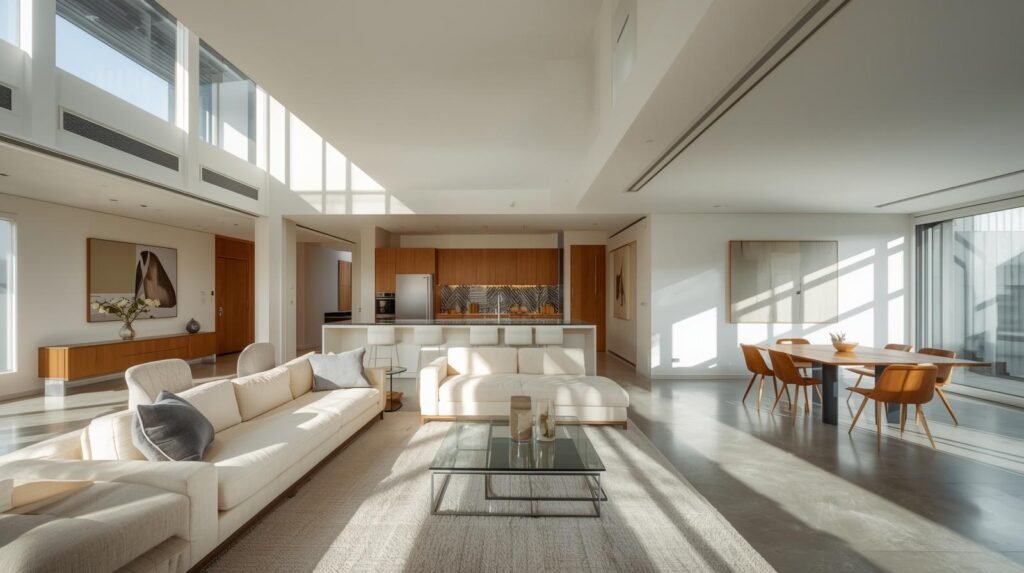
In modern residential architecture, the concept of open space has become increasingly popular. One of the most widely adopted interior design styles today is the open concept living room, which removes walls or partitions between the living room and other areas such as the dining room and kitchen. This design approach creates a spacious, connected, and multifunctional environment that fits perfectly with contemporary lifestyles.
Open concept living rooms are not only about aesthetics but also about functionality. Contemporary homes emphasize flexibility, comfort, and efficient use of space. By eliminating physical barriers, homeowners can create a more fluid layout that encourages interaction, maximizes natural light, and makes the entire home feel larger.
The Concept of Open Living Spaces
An open concept living room integrates multiple areas of the house into a single unified space. Instead of separating rooms with walls, the design relies on visual cues such as furniture placement, lighting, flooring, and color schemes to define each zone.
Typically, an open concept layout combines three main areas:
-
The living room, where family members gather and relax
-
The dining area, where meals are shared
-
The kitchen, which serves as the functional center of the home
This integrated design creates a natural flow between activities. Someone preparing food in the kitchen can easily interact with people relaxing in the living room or sitting at the dining table. This layout is especially ideal for families who enjoy spending time together or hosting guests.
Benefits of Open Concept Living Rooms
1. Creates a Spacious Atmosphere
One of the biggest advantages of open concept living rooms is the sense of space they provide. Without walls dividing the rooms, the entire area appears larger and more open. Even smaller homes can feel more spacious with this layout.
High ceilings, large windows, and minimalist furniture further enhance the feeling of openness. The visual continuity between spaces allows the eye to travel freely, making the home feel less confined.
2. Maximizes Natural Lighting
Natural light plays a crucial role in contemporary interior design. Open concept layouts allow sunlight to travel through multiple areas of the home without obstruction.
Large windows, sliding glass doors, or skylights are often used to bring more daylight into the living room and surrounding spaces. This not only improves the appearance of the home but also helps reduce energy consumption during the day.
3. Improves Social Interaction
Modern families value connection and communication within the home. Open concept living rooms support this lifestyle by allowing people to interact easily, even when they are in different areas.
For example, parents can cook while still supervising children playing in the living room. Guests can socialize comfortably without feeling separated from the host. This layout makes gatherings more enjoyable and inclusive.
4. Flexible and Multifunctional Space
Another advantage of open concept living rooms is flexibility. The large open space can be adapted for various activities such as family movie nights, small parties, or even working from home.
With the right furniture arrangement, the same area can serve multiple functions without feeling overcrowded.
Key Design Elements for an Open Concept Living Room
Designing a successful open concept living room requires careful planning. Several elements must work together to maintain both openness and organization.
Furniture Arrangement
Furniture plays a crucial role in defining zones within an open space. Sofas, coffee tables, bookshelves, or rugs can help separate the living room area from the dining or kitchen space.
A large sectional sofa, for instance, can act as a subtle divider between the living room and dining area. Rugs are also commonly used to visually frame the seating area.
Consistent Color Palette
Color coordination is essential in open concept interiors. Since multiple areas share the same visual space, using a consistent color palette helps create harmony.
Neutral colors such as white, beige, grey, and natural wood tones are commonly used in contemporary homes. These colors create a calm and elegant atmosphere while allowing decorative accents to stand out.
Lighting Design
Lighting is another important aspect of open concept living room design. Instead of relying on a single light source, layered lighting is recommended.
Common lighting options include:
-
Pendant lights above the dining table
-
Recessed lighting for general illumination
-
Floor lamps for cozy reading corners
-
Accent lighting to highlight artwork or architectural features
This combination creates depth and enhances the overall atmosphere of the room.
Flooring Continuity
Using the same flooring material across the living room, dining area, and kitchen helps maintain visual continuity. Materials such as hardwood, ceramic tiles, or polished concrete are popular choices in contemporary homes.
However, rugs can still be used to subtly differentiate the living room area without breaking the open flow.
Popular Open Concept Living Room Styles
Open concept layouts can be adapted to different interior styles depending on personal preferences.
Modern Minimalist
Minimalist open living rooms focus on simplicity, clean lines, and uncluttered spaces. Furniture is kept minimal, and decorative elements are carefully selected to maintain a clean aesthetic.
Scandinavian Style
Scandinavian interiors emphasize light colors, natural materials, and cozy textures. Wooden furniture, soft textiles, and warm lighting create a welcoming environment within an open layout.
Industrial Style
Industrial open concept living rooms often feature exposed brick walls, metal accents, and neutral tones. This style works particularly well in loft apartments or urban homes.
Contemporary Luxury
For homeowners seeking a more luxurious feel, contemporary open living rooms may include high-end materials such as marble, glass, and custom furniture. Large statement lighting fixtures and artistic décor can elevate the overall design.
Tips for Designing an Open Concept Living Room
To achieve a balanced and functional open living space, consider the following tips:
-
Choose furniture that fits the scale of the room
-
Maintain consistent colors and materials
-
Use rugs or lighting to define zones
-
Avoid overcrowding the space with too many decorations
-
Incorporate storage solutions to keep the area tidy
Proper planning ensures that the space remains comfortable, stylish, and functional.
Open concept living room design represents the essence of contemporary living. By removing unnecessary walls and creating a seamless connection between spaces, homeowners can enjoy a brighter, more spacious, and more social environment.
With thoughtful furniture placement, harmonious color schemes, and well-designed lighting, an open concept living room can become the heart of the home—a place where comfort, style, and functionality come together perfectly.