
Choose Materials Around Use, Climate, and Craft
For Custom Furniture, the best material is not simply the most expensive one. Choose materials by matching how the piece will be used, the room climate, the desired look, maintenance tolerance, and the budget areas that matter most. Luxury Furniture feels exceptional when the visible finish, internal construction, comfort layers, and detailing all support the same design intention.
A marble dining table, walnut cabinet, and tailored sofa need different decisions. The goal is balance: day one beauty, lasting performance, and architectural fit.
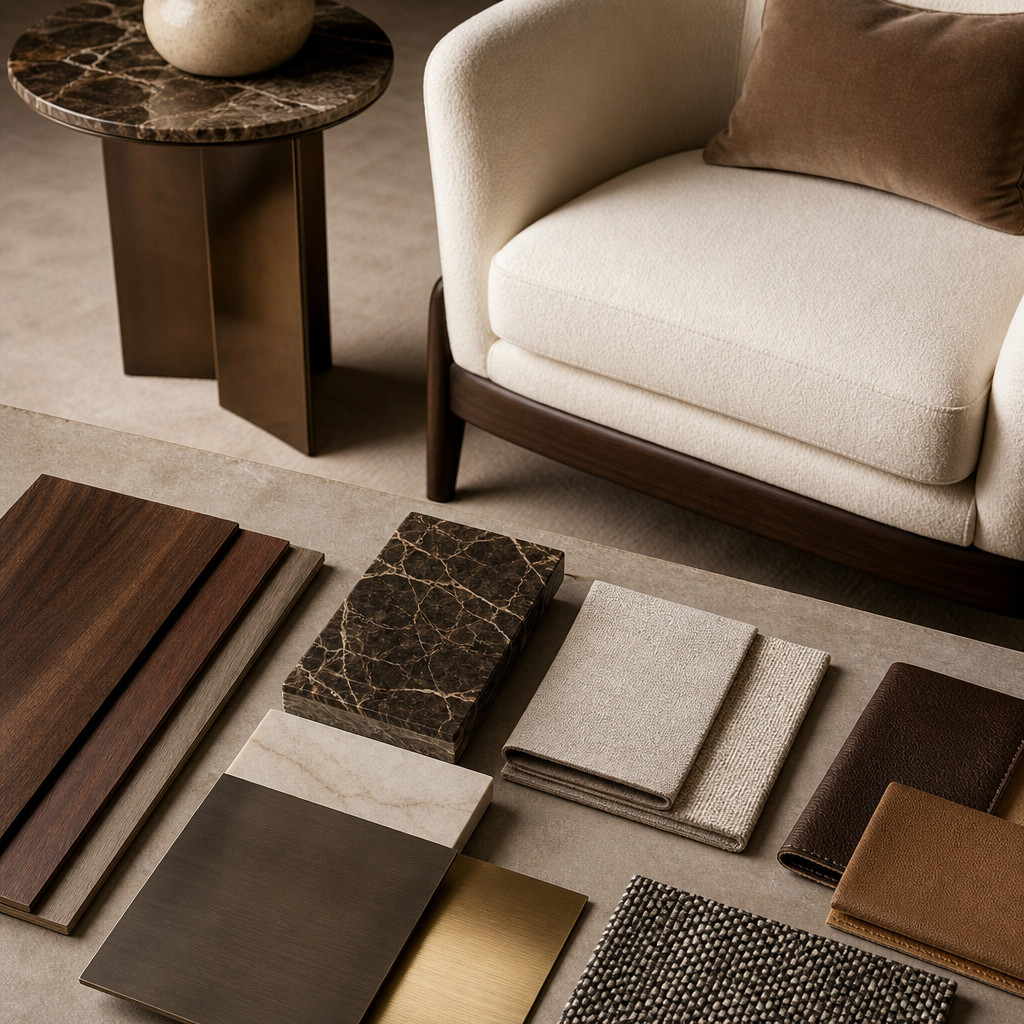
Start With the Piece’s Purpose
Before comparing samples, define the role of the furniture. A console in a quiet foyer can prioritize dramatic grain or delicate metalwork. A hotel banquette, family sofa, office desk, or restaurant tabletop needs stronger attention to abrasion, stain resistance, cleanability, and repair options.
- Who uses it daily, and how carefully?
- Will food, humidity, sunlight, cosmetics, or luggage touch it?
- Should it age gracefully, stay pristine, or be easily refinished?
- Is comfort, statement appearance, or low maintenance the priority?
Solid Wood and Engineered Wood
Solid wood offers depth, natural variation, and the possibility of refinishing. It suits table edges, chair frames, premium cabinetry details, and pieces where tactile warmth matters. Because wood expands and contracts, construction must allow movement, especially in humid or air conditioned interiors.
How to evaluate wood
- Look for stable joinery, smooth sanding, consistent staining, and well protected end grain.
- Expect variation in grain and tone; that is part of the material’s character.
- Use engineered wood where dimensional stability is valuable, such as large panels, doors, and built in units.
High quality engineered substrates with veneer can be a sensible luxury choice, not a downgrade, when the design needs flat surfaces, matched grain, or lighter weight.
Veneers: Refined, Efficient, and Highly Decorative
Veneer is a thin layer of real wood applied over a stable core. In Luxury Furniture, it enables book matched patterns, rare visual effects, curved forms, and consistent surfaces that may be impractical in solid timber.
What to check
- Ask to see a representative sample, because veneer layout changes the final mood.
- Inspect edges, corners, and transitions, where poor detailing becomes obvious.
- Choose protective finishes according to use, not just gloss level.
Stone, Porcelain, and Stone Like Surfaces
Natural stone brings unique veining, cool touch, and architectural presence. It works beautifully for table tops, counters, vanities, and accent panels, but it can stain, etch, chip, or require sealing depending on the stone and finish.
Porcelain, sintered stone, quartz, and other stone like surfaces can offer a more uniform look and practical resistance for busy settings. They are useful when clients want marble inspired appearance with more predictable maintenance.
Metals for Structure and Detail
Metal can be structural, decorative, or both. Stainless steel, brass tones, bronze finishes, aluminum, and powder coated steel each create a different impression. Consider fingerprints, patina, scratch visibility, and how the finish meets wood, stone, or upholstery.
For premium projects, metal detailing should feel intentional. A thin shadow gap, recessed pull, or leg profile can make Custom Furniture look lighter and more architectural without adding visual noise.
Upholstery Fabrics, Leather, Foam, and Internal Construction
For seating, the hidden layers matter as much as the cover. Fabric affects texture, color, breathability, and cleanability. Leather adds natural grain and a sophisticated feel, but it can show scratches, body oils, sunlight exposure, and patina more visibly.
Comfort decisions
- Foam density and layering influence firmness, resilience, and how crisp the silhouette remains.
- Frames should feel rigid, balanced, and appropriate for the scale of the piece.
- Suspension, padding, seams, and cushion construction determine daily comfort more than fabric alone.
In commercial, hospitality, or family environments, performance fabrics may be more practical than delicate weaves. For formal lounges, richer textures and softer hand feel may justify more careful maintenance.
Coordinate Materials With the Interior
A luxury piece should belong to the room, not compete with it. Compare material samples against flooring, wall finishes, lighting temperature, hardware, artwork, and nearby furniture. Warm woods can soften stone floors. Dark metal can sharpen pale upholstery. Textured fabric can calm glossy surfaces.
Request physical samples whenever possible. View them in morning light, evening light, and under the actual artificial lighting. Photograph combinations, but make the final decision by eye and touch.
Budget Priorities and Sustainability Considerations
Spend where failure or discomfort would be costly: frames, joinery, stone support, upholstery foam, and high touch finishes. Save carefully on less visible surfaces, simplified detailing, or alternative substrates that still meet the design brief.
Sustainability should be discussed specifically, not assumed from marketing language. Ask about durability, repairability, efficient material use, responsible sourcing options, low waste design decisions, and whether the piece can be refinished or reupholstered later.
Common Mistakes to Avoid
- Choosing a material from a small digital image only.
- Selecting delicate finishes for high traffic or hospitality use.
- Ignoring humidity, sunlight, air conditioning, or cleaning routines.
- Focusing on surface beauty while overlooking frame, foam, or joinery.
- Mixing too many statement materials in one room.
Material Selection Checklist
- Purpose is clear.
- Samples match room lighting.
- Maintenance suits daily use.
- Finishes coordinate with architecture.
- Construction supports comfort and scale.
- Budget favors touchpoints.
FAQs
Is solid wood always best?
No. Fine veneer over a stable core can be better for large panels.
How many samples are enough?
Compare the actual shortlist, not every option.
Plan Your Custom Furniture With MCASA
For tailored guidance, contact MCASA or explore project inspiration on Instagram.