
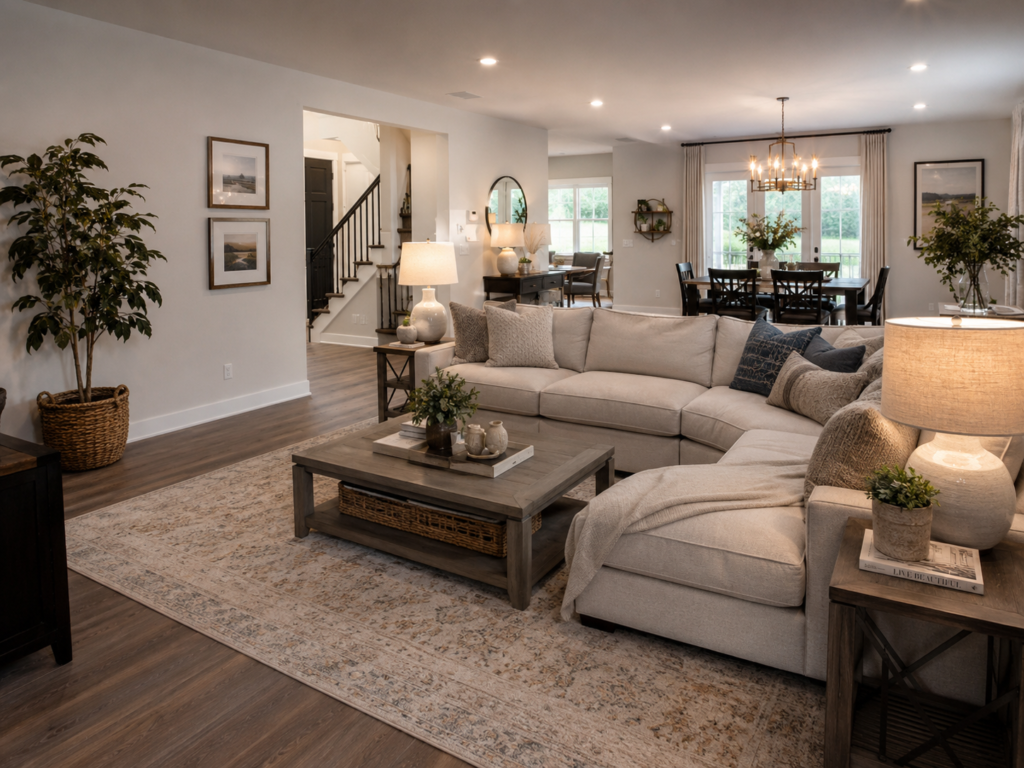
A living room is more than just a place to welcome guests. It is the heart of the home where families gather, relax, watch movies, enjoy conversations, and spend quality time together. That is why having a functional living room layout is very important for everyday comfort.
A good living room design should not only look beautiful but also feel comfortable, practical, and easy to use. With the right furniture arrangement, lighting, storage, and decoration, your living room can become a cozy space that supports your daily lifestyle.
1. Start with the Main Function of the Room
Before arranging your living room, think about how you use the space every day. Is it mainly for watching TV, relaxing with family, receiving guests, reading, or working from home?
When you understand the main function, it becomes easier to choose the right layout. For example, if your living room is used for family movie nights, place the sofa facing the TV. If it is used for conversation, arrange the chairs and sofa facing each other to create a warm and friendly atmosphere.
2. Choose the Right Sofa Placement
The sofa is usually the main furniture in a living room. Its position can strongly affect the comfort and flow of the room. Place the sofa in a spot that feels natural and does not block the walking area.
For a small living room, placing the sofa against the wall can make the space feel larger. For a bigger room, you can place the sofa in the center to create a more elegant and balanced layout. Add a coffee table in front of the sofa to make the space more practical for drinks, snacks, books, or decorations.
3. Create a Comfortable Walking Path
A functional living room should be easy to move around in. Avoid placing too much furniture in the middle of the room. Make sure there is enough space between the sofa, table, cabinet, and door area.
A clear walking path makes the room feel more open and comfortable. It also helps the living room look neat and organized. This is especially important for homes with children, elderly family members, or frequent guests.
4. Use Multi-Functional Furniture
Multi-functional furniture is a smart choice for modern homes. You can use a storage ottoman, sofa bed, nesting table, or TV cabinet with drawers. These pieces help save space while adding extra function to the room.
For example, a storage ottoman can be used as a footrest, extra seat, and storage box at the same time. A sofa bed is perfect for homes that sometimes need an extra sleeping area for guests.
5. Arrange Furniture for Better Conversation
A living room should feel welcoming and friendly. To create a comfortable conversation area, arrange the seating so people can easily face each other. Avoid placing all chairs too far apart.
You can combine a sofa with one or two accent chairs to make the layout more flexible. Add a rug under the seating area to visually connect the furniture and create a cozy atmosphere.
6. Maximize Natural Light
Natural light can make a living room feel brighter, fresher, and more spacious. Try not to block windows with large furniture. Use light curtains to allow sunlight to enter while still maintaining privacy.
If your living room does not get much sunlight, use warm lighting from floor lamps, table lamps, or wall lights. Good lighting can instantly improve the mood and comfort of the room.
7. Add Smart Storage Solutions
A comfortable living room should not feel messy. Use cabinets, shelves, baskets, or hidden storage to keep daily items organized. Remote controls, magazines, toys, blankets, and chargers should have their own place.
Wall shelves are a great option for small spaces because they save floor area. You can use them to display books, plants, photo frames, or decorative items without making the room feel crowded.
8. Use Rugs to Define the Area
A rug can help define the living room area, especially in open-plan homes. It brings warmth, texture, and visual balance to the space. Choose a rug size that fits your seating arrangement.
Ideally, the front legs of the sofa and chairs should sit on the rug. This helps the furniture feel connected and makes the layout look more intentional.
9. Keep the Layout Flexible
Everyday comfort means your living room should be easy to adjust when needed. Choose lightweight chairs, movable tables, or modular furniture that can be rearranged for different activities.
For example, you may want a relaxed setup for watching TV on weekdays and a more open layout when guests come over. A flexible layout allows your living room to adapt to your lifestyle.
10. Add Personal Touches
A functional living room does not have to be plain. Add personal decorations such as family photos, artwork, indoor plants, cushions, and soft throws. These details make the room feel warm and alive.
Choose colors and textures that match your personality. Neutral colors create a calm and elegant look, while bold accents can make the room feel energetic and stylish.